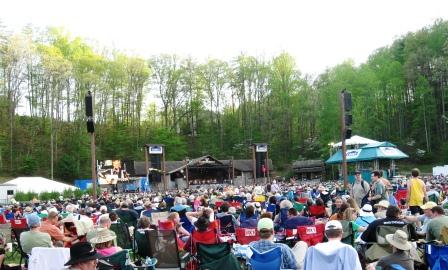
MerleFest, the sprawling four-day Americana music festival held the last weekend of April at Wilkes Community College, is what outdoor music festivals should aspire to. It is professionally run and offers hundreds of performances. Many artists play together in combinations that will never happen elsewhere.
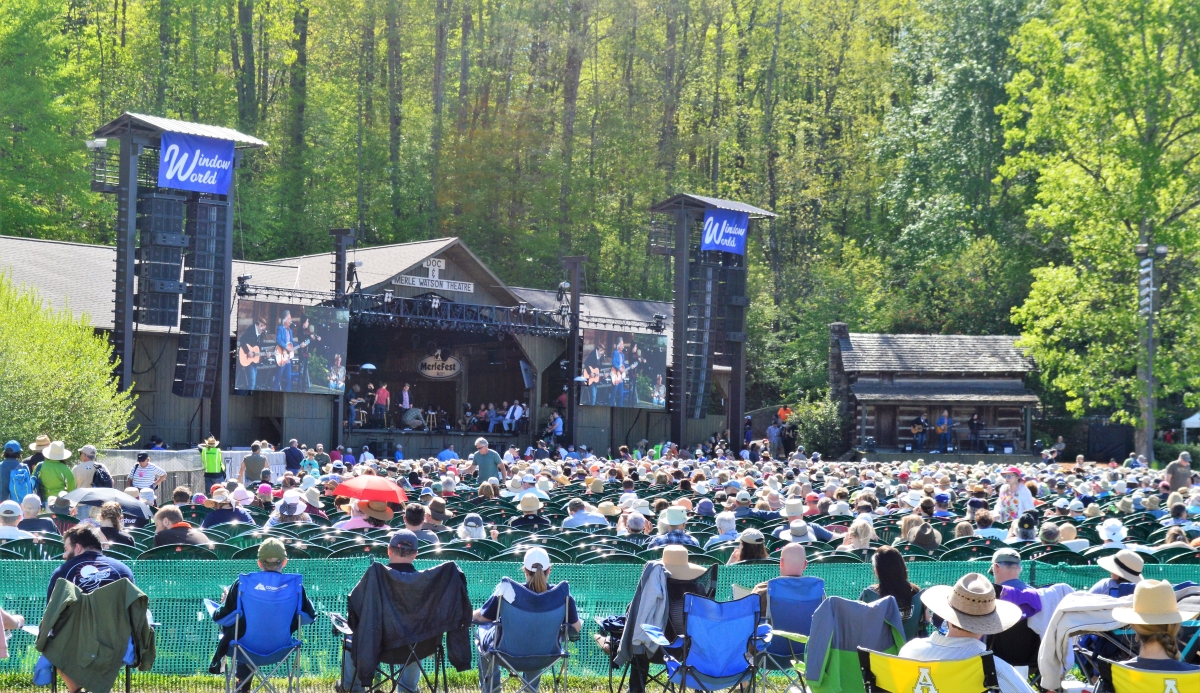
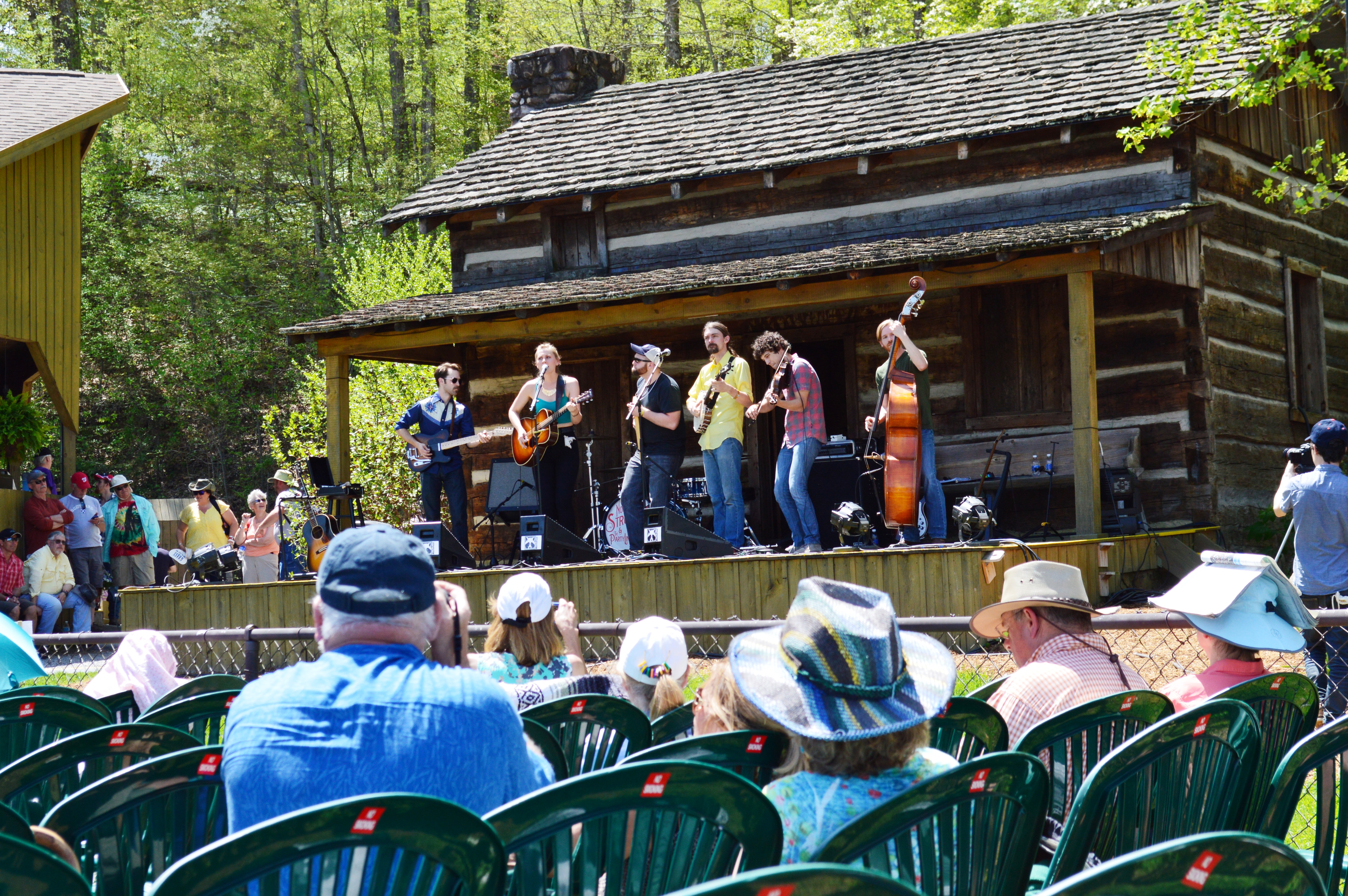
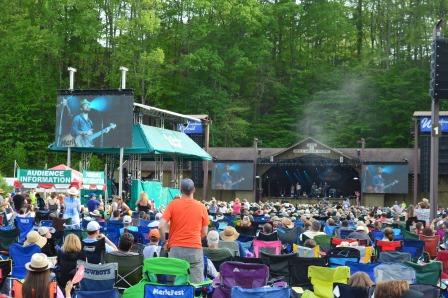
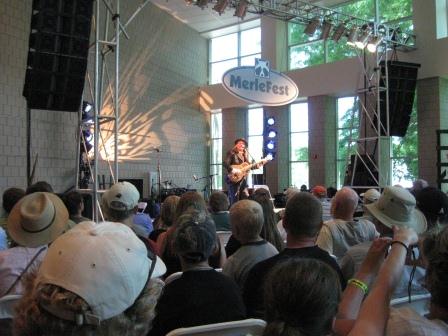
As bands set up on the Watson Stage, MerleFest's main stage, other acts keep the music going on the Cabin Stage, to the right of Watson (below). Meanwhile, the festival presents shows on about a dozen more stages across campus.
MerleFest is held in honor of the late Merle Watson, the son and musical partner of Doc Watson who was killed in an accident in 1985. Since the first show in 1988, it has grown into a celebration of traditional music and the many forms that have grown from it. Doc, who played the festival each of its first 25 years until his death in May 2012, called his and Merle's music "tradition-plus." Doc's more recent musical partners, like his grandson Richard Watson (who died in June 2015) and David Holt, and members of Merle's side band Frosty Morn, have also been regulars at the festival.
Other performers include top touring acts from Americana, progressive acoustic, bluegrass, country and rock; bluegrass mainstays; and up-and-coming groups and artists. In recent years, the festival has presented a mainstream country band as Thursday night's headliner, and a classic rock band to top the Friday night bill. Some acts play only a single evening or Sunday afternoon show on the main stage, but many bands perform several times during the weekend, and some return to MerleFest year after year.
The Chris Austin Songwriting contest draws hundreds of entries and was a boon to the careers of Gillian Welch, Tift Merritt, Martha Scanlan and others. Competitions for guitar, banjo and mandolin players that had been a part of the festival since its early days were discontinued as of the 2014 edition in favor of additional showcases for youth performers and up-and-coming acts. There are also raffles for musical instruments, ticket packages for the following year’s festival, and other goodies.
Below, Chris Thiele and Nickel Creek play the Watson Stage Sunday afternoon of the 2024 festival.

MerleFest typically draws 75,000 to 80,000 people over the course of the weekend, and has been an economic boon to Wilkes Community College and the surrounding region. It’s an orderly crowd of diverse age. Local school groups get in free on Friday, bringing about 3,200 kids in grades 5, 8 and 12 to the festival. The weekend’s headliner plays Saturday night, making it the most crowded evening. The 2005 show, with Alison Krauss & Union Station, Loretta Lynn, Earl Scruggs, and Ricky Skaggs & Kentucky Thunder drew a record 82,666 people.
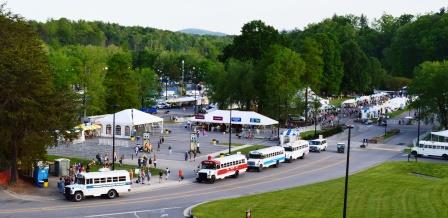
Alcohol is not allowed, though coolers are OK. Backpacks, coolers, chair bags and the like get a quick search on the way in, with more focus on keeping glass out of the grounds than anything else. Free overnight storage for chairs and other gear is available on the festival grounds, and is well run. Free shuttle buses operated by local Boy Scout troops (which accept donations) line up outside the festival's gates (below) and run constantly, ferrying thousands day and night between the festival and off-campus parking lots.
The main stage area consists of the Watson Stage, and the Cabin Stage (shown above), a log cabin next to the main stage where performers play on the porch between sets on the Watson Stage. The area holds several thousand people, with 48 rows of reserved seats and acres behind them for camp chairs. General admission ticket-holders typically stake out a spot with chairs and coolers at the start of the day, and freely leave them unattended as they head for shows at any of a dozen other stages. Some have second camp chairs, cushions or blankets they carry with them. Until the evening's dinner break, anyone can sit in a reserved seat but must move if the ticket-holder shows up and wants it.
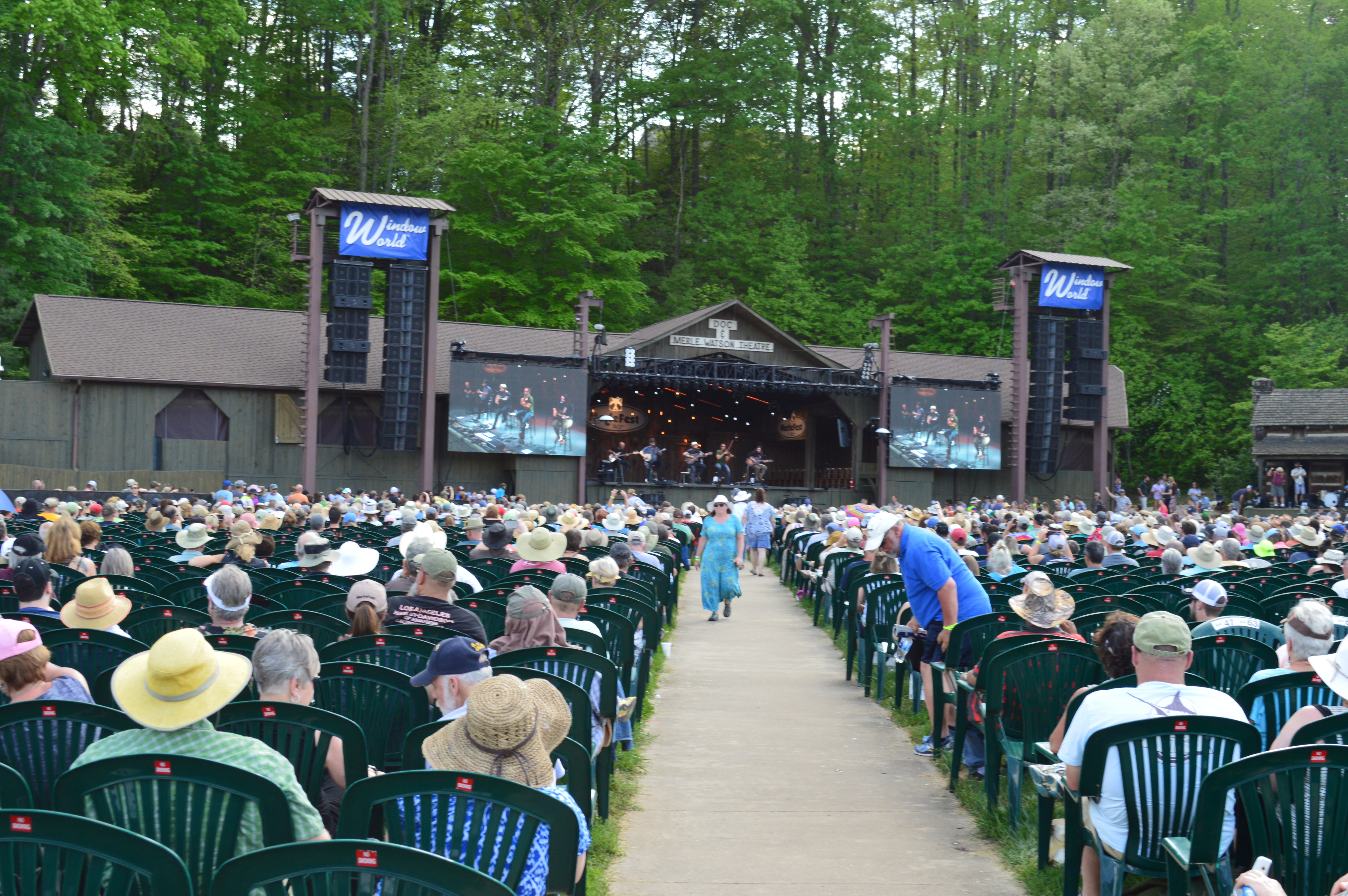
In 2013, the festival replaced a lone video screen to the left of the Watson Stage (shown with the image of Doc at the top of the page) with three large screens to provide images to the entire Watson Stage area.
Below are Doc and David Holt on stage at the Traditional Stage tent in 2009. Doc drew a large crowd wherever he played.
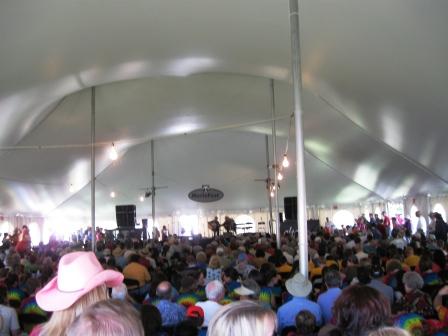
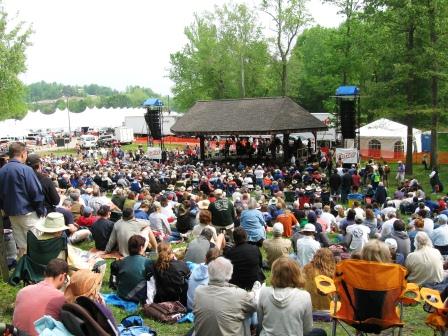
The Traditional Stage tent typically overflows when bigger acts play there. The shot below was during a Peter Rowan performance in 2015.
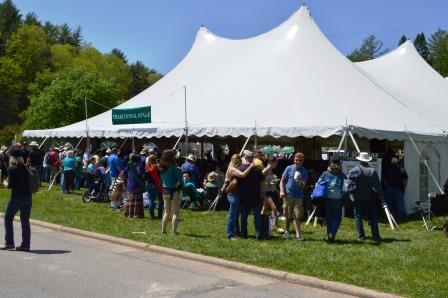
For any show, if you can tear yourself away from the one you’re watching to get to the next one early, you’ll stand a better chance of getting a choice seat.
Except for the Dance Tent, below, and the songwriters’ showcase in the Alumni Lounge, the smaller stages shut down for the Friday and Saturday evening shows on the Watson and Cabin stages.
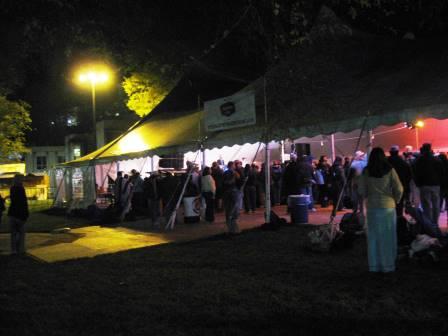
The open lawn at the Americana stage, below, can leave people jockeying for shade during midday shows.
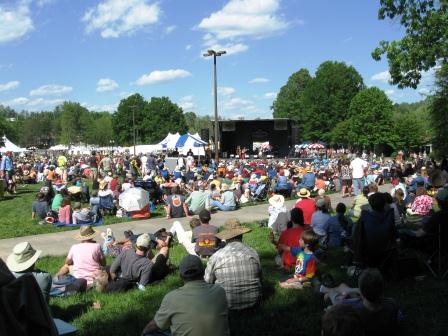
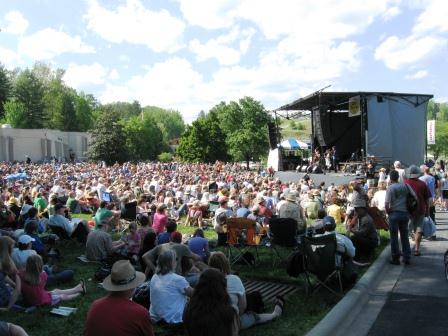
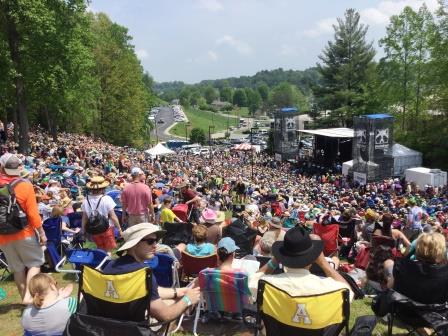
Hillside, one of the festival's main stages, below, is true to its name. Several rows of plastic chairs on the pavement in front of the stage get taken quickly, and the hillside fills for big shows.


A highlight of the festival since 2008 has been the Hillside Album Hour with The Waybacks and Friends, which is a rendition of a classic rock album from start to finish. The Hillside stage area, shown below just ahead of the Album Hour rendition of "Sgt. Pepper's Lonely Hearts Club Band" in 2017, starts to fill early on Saturday for the afternoon show.
Below The Waybacks are joined by on the right by John Cowan on vocals and Jens Kruger on banjo for the 2024 rendition of Stevie Wonder's "Innervisions."

Several top acts play the bowl-shaped amphitheater at Creekside, below, during the festival.

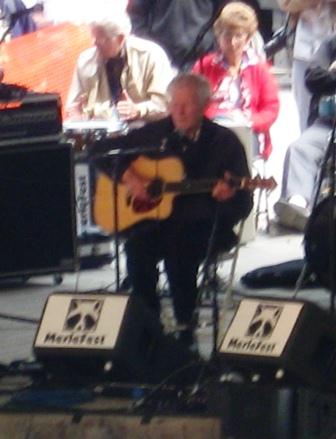
Doc's last public performance was at the Spirit of Sunday gospel show at Creekside for MerleFest 2012 (the photo of him below is from Creekside on Sunday morning in 2011).
 |
 |
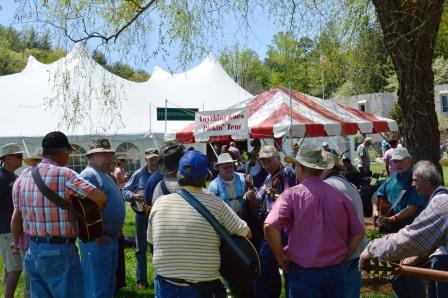
The pickin' tents - for old time, traditional and "anything goes" - stay busy with players from everywhere, so busy that the jamming spills out of the tent and onto the lawn.
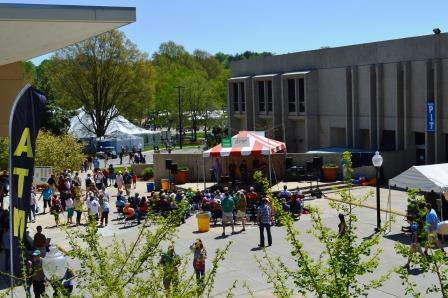
The Plaza Stage, below, sits at a busy crossroads, with the Mayes Pit workshop auditorium indoors to the right (note the blue "Pit" sign on the building), the Austin Stage in Alumni Hall indoors to the left, and foot traffic to and from the Hillside Stage passing by.
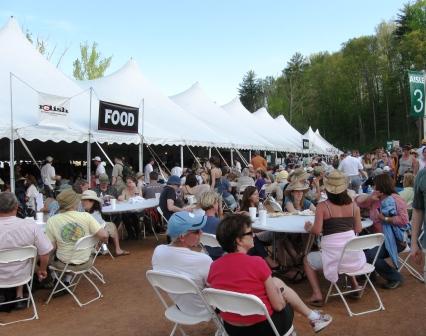
The length of the rear of the main stage area is occupied by a food concessions tent, where several campus and community nonprofit groups sell a variety of food and drinks. Additional food and drink vendors are elsewhere on campus. Adjacent to the food tent, at the far end of the Watson Stage area, top companies sell acoustic musical instruments and accessories in another tent. Back at stage right, a large tent houses CD and band T-shirt sales.
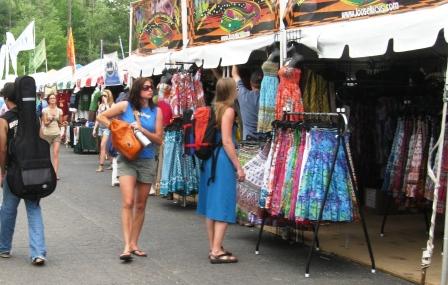
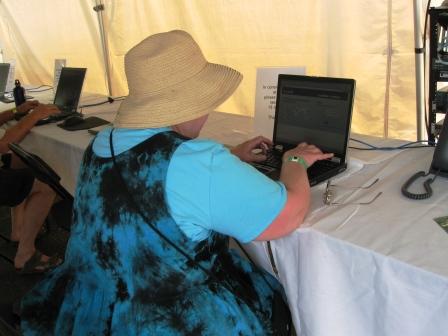
A separate vendor area offers T-shirts, caps and similar MerleFest ware, high-quality arts and crafts, such as handmade clothing, pottery and lithographs (plus some lesser-quality fare), a tent with Internet access, and many other shopping opportunities.
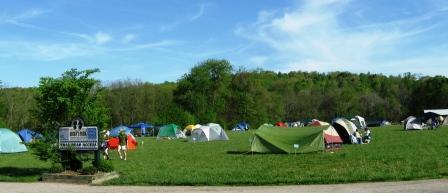
Additional camping in the area includes campgrounds at the W. Kerr Scott Dam and Reservoir, which is about a mile west on NC 268, the main road past the festival and through town.

Return to April Music Festivals
Go to the Carolina Music Festivals home page.